
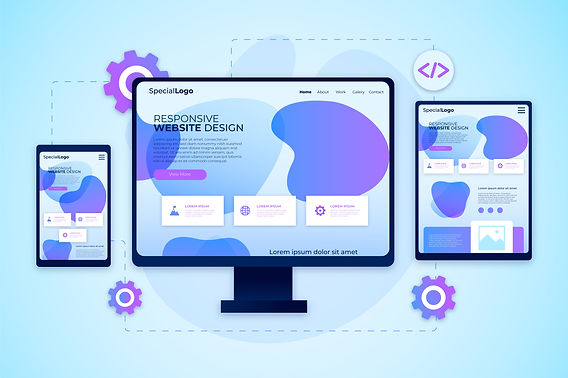
The Importance of Responsive Web Design for SEO
Responsive web design is crucial for search engine optimization (SEO) in today’s digital landscape. With the increasing use of mobile devices to access the internet, having a responsive website has become a necessity rather than an option.
Search engines like Google prioritize mobile-friendly websites in their search results. Websites that are not optimized for mobile devices may experience lower rankings and decreased visibility in search engine results pages (SERPs).
By implementing responsive web design, you ensure that your website provides a seamless and user-friendly experience across all devices, including desktops, laptops, tablets, and smartphones. This not only improves user satisfaction but also boosts your SEO efforts.
Responsive websites load faster and are easier to navigate on mobile devices, which can lead to lower bounce rates and higher engagement metrics. These positive user signals are taken into account by search engines when determining rankings.
In addition, having a single responsive website that adapts to different screen sizes eliminates the need for separate mobile and desktop versions of your site. This simplifies your SEO strategy by consolidating all your backlinks, content, and ranking signals into one URL.
In conclusion, responsive web design is not just about creating a visually appealing website—it is also essential for improving your site’s SEO performance. By ensuring that your website is optimized for all devices, you can enhance user experience, increase traffic, and boost your search engine rankings.
6 Key Benefits of Responsive Web Design for SEO Success
- Improves user experience on all devices
- Boosts search engine rankings
- Reduces bounce rates on mobile devices
- Consolidates backlinks and ranking signals for better SEO management
- Increases website loading speed on mobile devices
- Enhances overall site visibility in search engine results pages
Understanding the Drawbacks of Responsive Web Design: Complexity, Performance Issues, Limited Control, and SEO Challenges
Improves user experience on all devices
One significant advantage of responsive web design for SEO is its ability to enhance user experience on all devices. By ensuring that a website is optimized for various screen sizes and devices, users can enjoy a seamless and consistent browsing experience, leading to higher engagement and satisfaction levels. This improved user experience not only keeps visitors on the site longer but also positively impacts key SEO metrics such as bounce rate and time on page, ultimately contributing to better search engine rankings.
Boosts search engine rankings
Responsive web design plays a critical role in boosting search engine rankings by ensuring that websites are optimized for all devices. Search engines prioritize mobile-friendly websites in their algorithms, and responsive design helps provide a seamless user experience across different screen sizes. By improving user engagement, reducing bounce rates, and consolidating ranking signals into one URL, responsive web design enhances the overall SEO performance of a website, ultimately leading to higher search engine rankings and increased visibility in search results.
Reduces bounce rates on mobile devices
One significant advantage of responsive web design for SEO is its ability to reduce bounce rates on mobile devices. By providing a seamless and user-friendly experience across various screen sizes, responsive websites ensure that visitors can easily navigate and engage with the content. This improved usability leads to lower bounce rates as users are more likely to stay on the site longer, explore different pages, and ultimately increase engagement metrics. Search engines recognize these positive user signals and may reward responsive websites with higher rankings in search results.
Consolidates backlinks and ranking signals for better SEO management
One significant advantage of responsive web design is that it consolidates backlinks and ranking signals into a single URL, leading to more efficient SEO management. By having a unified website that adapts to various devices, you can concentrate all your SEO efforts on one platform, making it easier to track performance metrics, analyze data, and implement optimization strategies. This streamlined approach not only simplifies SEO management but also enhances the overall visibility and ranking potential of your website across search engines.
Increases website loading speed on mobile devices
One significant advantage of responsive web design for SEO is that it increases website loading speed on mobile devices. By optimizing your site to be responsive across various screen sizes and devices, you ensure that users accessing your website on smartphones and tablets experience faster loading times. This improved loading speed not only enhances user experience but also contributes to lower bounce rates, higher engagement levels, and ultimately better search engine rankings.
Enhances overall site visibility in search engine results pages
Responsive web design plays a crucial role in enhancing overall site visibility in search engine results pages (SERPs). By ensuring that your website is optimized for all devices, including mobile phones and tablets, you increase the chances of ranking higher in search engine rankings. Search engines like Google prioritize mobile-friendly websites, so having a responsive design can significantly improve your site’s visibility and reach a broader audience online.
Complexity
One significant con of responsive web design in relation to SEO is the complexity involved in its implementation. Designing a responsive website that functions seamlessly across various devices can be more intricate and time-consuming compared to developing separate mobile and desktop versions of a site. This increased complexity may require more resources, expertise, and testing to ensure that the responsive design performs optimally on all screen sizes. Despite the challenges posed by this complexity, the long-term benefits of improved user experience and SEO performance often outweigh the initial hurdles of implementing responsive web design.
Performance Issues
Performance can be a significant drawback of responsive web design when it comes to SEO. Responsive websites may encounter slower loading times on specific devices, particularly if they are not optimized correctly. This can negatively impact user experience and lead to higher bounce rates, ultimately affecting search engine rankings. It is crucial for website owners to address performance issues proactively by optimizing their responsive design to ensure fast loading times across all devices for better SEO results.
Limited Control
One con of responsive web design in relation to SEO is the limited control over design elements due to the need to adjust them to fit various screen sizes. This can result in potential restrictions in customization and branding, as certain visual aspects may need to be altered or simplified to ensure a consistent user experience across different devices. Maintaining a cohesive brand identity and unique design elements while catering to responsive design requirements can be a challenge, potentially impacting the overall aesthetic appeal and branding coherence of the website.
SEO Challenges
One significant con of responsive web design in relation to SEO is the challenge of maintaining consistent SEO performance across all devices. Search engine algorithms may prioritize specific aspects differently when ranking websites on different devices, leading to fluctuations in search rankings. This inconsistency can make it difficult for website owners to optimize their content effectively for all device types, potentially impacting their overall SEO performance.