
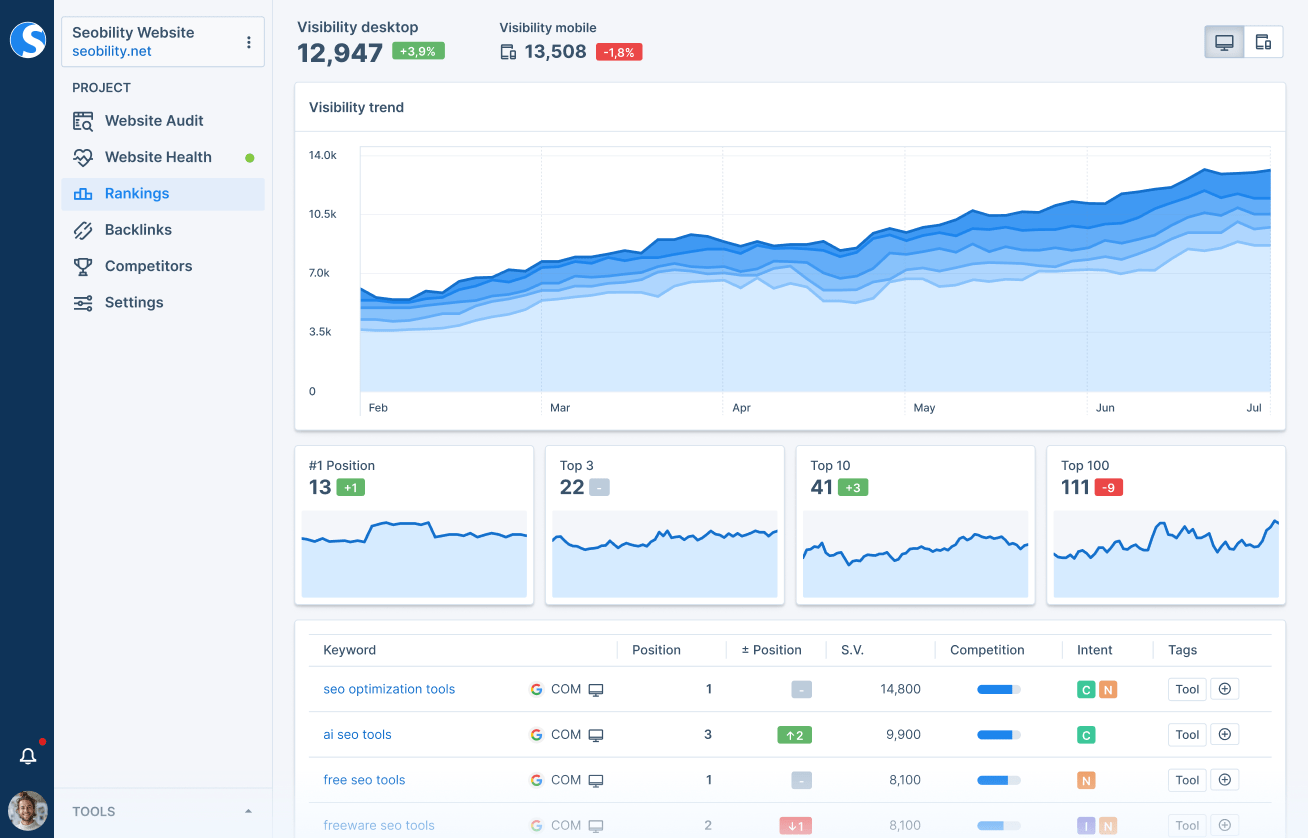
How to Improve My Website’s Ranking on Google
If you’ve ever searched for your website on Google and wondered why it doesn’t appear near the top, you’re not alone. Improving your website’s Google ranking takes time, useful content, and ongoing attention to both your visitors’ needs and your site’s technical health.
There is no guaranteed shortcut to the top of search results. Google uses many signals to decide which pages to show for a particular search, and rankings can change over time. The best approach is to make your website helpful, trustworthy, easy to use, and accessible to search engines.
Understand what “ranking” means
Your website doesn’t have one single Google ranking. Each page may appear in a different position depending on the search query, the user’s location, the device being used, and other factors. A page might rank well for one specific topic and poorly—or not appear at all—for another.
Start by identifying the searches that matter to your business or audience. Think about what someone might type when looking for the information, product, or service your page provides.
Create useful, original content
Content is more likely to perform well when it answers real questions clearly and thoroughly. Before writing or updating a page, consider:
- Who is this page for?
- What question or need does it address?
- What information would help the reader take their next step?
- Does the page offer something more useful or specific than similar pages?
Use clear headings, short paragraphs, and examples where they help explain a topic. Avoid repeating keywords unnaturally or publishing pages that provide little value. Search terms can help you understand what people are looking for, but the content should be written for people first.
Make each page easy to understand
Use a descriptive page title and a clear main heading. Organize the rest of the page with relevant subheadings, and make sure links explain where they lead. A concise meta description can also help people understand what a page offers when it appears in search results, although it is not a direct guarantee of higher rankings.
For example, a page about local plumbing services should clearly explain the services offered and the areas served, rather than relying on a vague title such as “Welcome.”
Check your technical SEO
Technical issues can make it harder for search engines to find, understand, or display your pages. Review these basics:
- Make sure important pages can be accessed by search engines.
- Use a logical site structure and descriptive URLs.
- Check for broken links and missing pages.
- Use HTTPS to secure your website.
- Make the site work well on phones and tablets.
- Improve page speed, especially on mobile devices.
- Add descriptive alternative text to meaningful images.
A sitemap can help search engines discover your pages, while Google Search Console can show whether Google has indexed them and report certain technical problems.
Build credibility and earn relevant links
Links from other reputable websites can help people discover your content and may contribute to how search engines evaluate your site. Focus on earning links naturally by publishing useful resources, sharing original research, participating in relevant communities, and building genuine relationships.
Avoid buying links or using automated schemes to manipulate rankings. These tactics can put your website at risk and often deliver little lasting value.
Measure progress with reliable tools
Google Search Console is a useful starting point for tracking search impressions, clicks, queries, and indexing status. Website analytics can help you understand what visitors do after arriving on your site.
Look for trends over time rather than expecting every page or keyword to improve immediately. If a page gets impressions but few clicks, its title and description may need to be clearer. If it receives visits but visitors do not find what they need, consider improving the page’s content or usability.
Be patient and keep improving
SEO is an ongoing process, not a one-time task. New websites may take time to be discovered, and changes to content or site structure may not lead to immediate results. Review your most important pages regularly, update outdated information, fix technical issues, and keep learning from search performance data.
Final thoughts
To improve your website’s ranking on Google, focus on making each page genuinely useful, technically accessible, and easy to navigate. There is no guaranteed formula for reaching the top, but steady improvements based on your audience’s needs can help your website earn more visibility over time.
7 SEO Tips to Improve Your Website’s Google Rankings
- Use relevant keywords naturally in titles and headings.
- Publish helpful, original content regularly.
- Make your site fast on mobile and desktop.
- Write clear, descriptive page titles and meta descriptions.
- Use descriptive links between related pages.
- Earn quality backlinks from trusted websites.
- Set up Google Search Console to monitor performance.
Use relevant keywords naturally in titles and headings.
Use relevant keywords naturally in your page titles and headings to help visitors and search engines quickly understand what each page is about. Choose phrases that match the topic and the way your audience might search, then work them into clear, descriptive wording. Avoid stuffing headings with repeated keywords; readability and usefulness should always come first.
Publish helpful, original content regularly.
Publish helpful, original content regularly to give visitors a reason to return and help Google understand what your website is about. Focus on answering real questions, sharing useful insights, and providing information your audience can trust. Consistency matters, but quality should come first: a thoughtful, well-researched page is more valuable than frequent posts that add little. Review and update older content as your information changes so it stays accurate and useful.
Make your site fast on mobile and desktop.
Make your site fast on both mobile and desktop to give visitors a smoother experience and help search engines understand that your pages are easy to use. Compress large images, remove unnecessary scripts, use reliable hosting, and test your pages regularly with tools such as Google PageSpeed Insights. Pay special attention to mobile performance, since many people browse on phones and slow-loading pages can lead them to leave before your content appears.
Write clear, descriptive page titles and meta descriptions.
Write clear, descriptive page titles and meta descriptions to help people understand what each page offers before they click. A good title accurately summarizes the page and includes its main topic, while a concise meta description highlights the useful information readers will find. Keep both unique and natural—avoid stuffing them with keywords or making promises the page doesn’t deliver. Although meta descriptions don’t directly determine rankings, well-written search snippets can make your result more appealing and encourage the right visitors to click.
Use descriptive links between related pages.
Use descriptive links to connect related pages on your website and help visitors find useful information. Instead of linking with vague text like “click here,” use words that explain what the reader will find, such as “learn how to improve website speed.” Clear link text makes your site easier to navigate and helps search engines understand how your pages relate to one another.
Earn quality backlinks from trusted websites.
Earn quality backlinks by creating useful, original content that trusted websites genuinely want to reference. A link from a relevant, reputable site can help people discover your pages and may support your website’s visibility in Google search results. Focus on building real relationships, sharing helpful resources, and earning mentions naturally rather than buying links or using schemes that manipulate rankings.
Set up Google Search Console to monitor performance.
Set up Google Search Console to see how your website performs in Google Search. It can show which queries bring visitors to your pages, how often your pages appear in results, and how many people click through. You can also check whether Google has indexed your pages and review alerts about certain site issues. Use these insights to spot opportunities, improve pages that receive impressions but few clicks, and track changes over time.