
Web Ranking: How Search Results Are Earned
Web ranking is the position a webpage holds in search results for a particular query. A page that appears near the top may attract more visits, while one farther down may receive less visibility. Rankings can vary by search engine, location, device, search query, and time, so there is no single position that applies to every search.
Improving a website’s visibility takes more than adding keywords to a page. Search engines aim to show results that are useful, relevant, and accessible. A sustainable approach combines helpful content, sound technical foundations, and a good experience for visitors.
How Search Engines Rank Pages
Search engines generally discover webpages by crawling links and other signals, add information about those pages to an index, and then select and order results when someone searches. Their systems consider many signals to estimate which pages best meet the searcher’s needs.
The exact systems and their weighting change over time. No one outside a search engine can guarantee a specific ranking or explain every factor. In general, though, pages are more likely to perform well when they are relevant to the query, easy to use, trustworthy, and technically accessible.
Build Content Around People’s Needs
Strong content answers real questions clearly and accurately. Before writing, consider what a visitor wants to accomplish. Someone searching for a product comparison may need practical differences and limitations, while someone looking for instructions may need clear steps and examples.
- Choose a focused topic and explain it in enough depth to be useful.
- Use clear headings so readers can find the information they need.
- Support important claims with reliable sources or relevant experience.
- Keep information accurate and update it when it becomes outdated.
- Avoid repeating keywords unnaturally or publishing pages that add little value.
Keywords can help describe a page’s subject, but they should fit naturally into the title, headings, and body text. Writing for a list of phrases instead of for readers can make content awkward and less helpful.
Make the Website Easy to Use
A visitor should be able to understand a page, navigate the site, and complete a task without unnecessary friction. Use readable text, descriptive links, accessible colors, and a layout that works on phones as well as larger screens. Make important information easy to find, and avoid intrusive elements that interrupt the experience.
Page speed and stability also matter to visitors. Compress images, remove unnecessary scripts, and use reliable hosting where appropriate. These improvements can make a site more pleasant to use, although faster loading alone does not guarantee higher rankings.
Take Care of Technical SEO
Technical search engine optimization (SEO) helps search engines access and understand a website. Start by checking that important pages can be crawled and indexed. Review the site’s internal links, page titles, descriptions, and canonical URLs. Use a sitemap to help search engines discover key pages, and fix broken links or redirect problems.
Structured data can provide search engines with additional context about certain kinds of content. It must accurately represent information visible on the page, and adding it does not guarantee special search results. Technical work should support useful content, not replace it.
Earn Credibility Over Time
Links from other relevant websites can help people discover a site and may provide useful context about its reputation. The most dependable way to earn links is to publish something worth citing, such as original research, practical resources, or expert commentary. Avoid buying links or using schemes designed to manipulate search results; these tactics can create risk without building lasting value.
For businesses serving a specific area, local visibility also matters. Keep business name, address, and phone information accurate and consistent, maintain a complete business profile on relevant platforms, and invite genuine customer feedback. Local results can depend on factors such as relevance, distance, and prominence.
Measure Progress with the Right Metrics
Rankings are only one measure of a website’s performance. Track organic visits, search impressions, click-through rates, conversions, and the queries that bring people to your pages. Search analytics tools can reveal which pages are gaining visibility and where visitors may need clearer information.
Because rankings fluctuate, review trends over time rather than reacting to a single daily change. Compare similar periods, check whether the right audience is arriving, and connect search performance to meaningful outcomes such as inquiries, sales, or newsletter sign-ups.
A Long-Term Approach to Web Ranking
There is no guaranteed shortcut to the top of search results. A practical strategy is to understand your audience, publish genuinely useful pages, keep the site technically sound, and improve it based on evidence. Consistent work can strengthen visibility over time while creating a better experience for the people the website is meant to serve.
8 Benefits of Web Ranking: Boosting Visibility, Traffic, and Business Growth
- Increases online visibility
- Attracts more organic traffic
- Helps reach relevant audiences
- Builds brand awareness
- Can generate qualified leads
- Supports business growth
- Improves credibility
- Provides measurable performance insights
5 Challenges of Web Ranking: Navigating Fluctuations, Competition, and Conversion Hurdles
- Rankings can fluctuate frequently.
- High rankings take time to earn.
- SEO competition can be intense.
- Algorithm updates can reduce visibility.
- Top rankings don’t guarantee conversions.
Increases online visibility
Higher web rankings can increase a website’s online visibility by helping it appear closer to the top of search results when people look for related products, services, or information. More prominent placement makes it easier for potential visitors to discover the site, learn about the brand, and explore what it offers. Over time, greater visibility can support more relevant traffic and help a business reach a wider audience.
Attracts more organic traffic
A strong web ranking can attract more organic traffic by helping your website appear prominently when people search for topics, products, or services you offer. Because these visitors arrive through unpaid search results, they may be more likely to engage with your content or become customers when your pages match their needs. Higher visibility can also introduce your site to new audiences and support steady growth over time.
Helps reach relevant audiences
A strong web ranking can help your website reach people who are already searching for the products, services, or information you offer. When your pages appear for relevant search queries, visitors are more likely to be interested in your content and take a useful next step, such as reading an article, contacting your business, or making a purchase. This can make search visibility a more effective way to connect with your intended audience.
Builds brand awareness
A strong web ranking can build brand awareness by helping more people discover your business when they search for relevant products, services, or information. Appearing prominently in search results gives your brand greater visibility, even before someone is ready to make a purchase. Over time, repeated exposure can make your business more familiar and memorable, helping potential customers recognize and trust your brand when they’re ready to take action.
Can generate qualified leads
Strong web rankings can generate qualified leads by helping a business appear when people search for products or services they already need. Because these visitors are actively looking for relevant solutions, they may be more likely to explore the site, make an inquiry, or become customers. By targeting search terms that reflect the right audience’s needs, a business can attract more relevant traffic and turn its search visibility into meaningful opportunities.
Supports business growth
Strong web rankings can support business growth by making a company easier to find when potential customers search for its products or services. Greater visibility can bring more relevant visitors to a website, increase brand awareness, and create more opportunities for inquiries, leads, and sales. Over time, a steady presence in search results can also help a business build trust and reach new audiences without relying solely on paid advertising.
Improves credibility
A strong web ranking can improve a business’s credibility by helping it appear prominently when people search for relevant information, products, or services. Visitors may view a highly visible result as more established or trustworthy, especially when the page also offers accurate, useful content and a professional experience. While ranking alone does not prove a business is credible, it can make a positive first impression and encourage potential customers to learn more.
Provides measurable performance insights
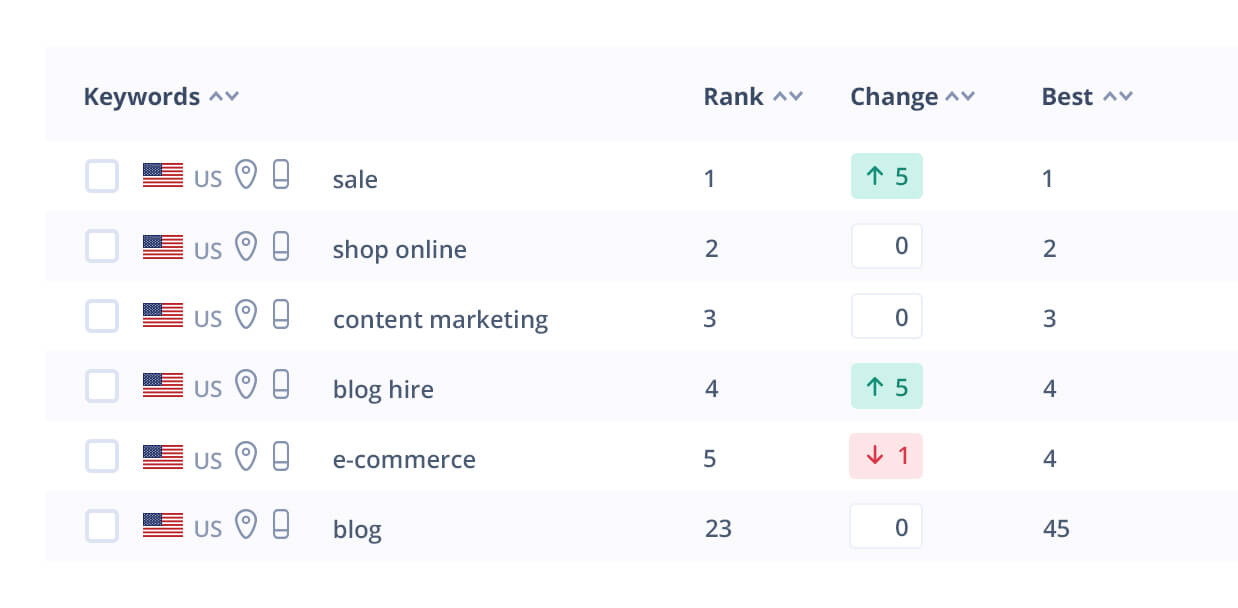
Web ranking provides measurable performance insights by showing where your pages appear in search results and how that visibility changes over time. By tracking rankings alongside impressions, clicks, website visits, and conversions, you can identify which topics and pages attract attention, spot opportunities to improve, and assess whether your search strategy is helping you reach your goals. Ranking data is most useful when viewed as part of a broader picture, since a higher position alone does not always mean more visitors or better business results.
Rankings can fluctuate frequently.
One downside of web ranking is that positions can fluctuate frequently. Search engines regularly update their systems, competitors publish new content, and changes in user behavior or search results can all affect where a page appears. As a result, a webpage may move up or down even when its content has not changed, making it difficult for businesses to predict traffic or measure progress from rankings alone. Tracking longer-term trends alongside visits, leads, and sales offers a more reliable view of performance.
High rankings take time to earn.
One downside of web ranking is that high positions take time to earn. Search engines need to discover and assess a website, while new content often needs time to build visibility, credibility, and links from other sites. Even with consistent SEO work, results can take months and rankings may fluctuate along the way. This makes patience essential, especially for newer websites or businesses hoping for quick traffic.
SEO competition can be intense.
SEO competition can be intense, especially in popular industries where many websites are targeting the same search terms. Established competitors may have years of useful content, strong reputations, and quality links, making it difficult for newer or smaller sites to earn prominent positions quickly. As a result, improving web rankings often takes sustained effort, careful research, and a clear strategy—and even then, search performance can fluctuate as competitors and search algorithms change.
Algorithm updates can reduce visibility.
One drawback of web ranking is that search engine algorithm updates can reduce a website’s visibility, sometimes with little warning. A page that once ranked highly may appear lower in results after ranking systems change, leading to fewer visits, inquiries, or sales. Because these systems are complex and constantly evolving, site owners cannot control every change; they can reduce risk by focusing on helpful, trustworthy content and a strong user experience rather than relying on short-term ranking tactics.
Top rankings don’t guarantee conversions.
A top search ranking can bring more visitors to your website, but it doesn’t guarantee they’ll become customers. People may click through and find that the page doesn’t match what they’re looking for, the offer isn’t compelling, or the next steps aren’t clear. Slow load times, confusing navigation, and a lack of trust can also drive visitors away. Ranking well can increase visibility, but conversions depend on the full experience—from the search result to the final action.