
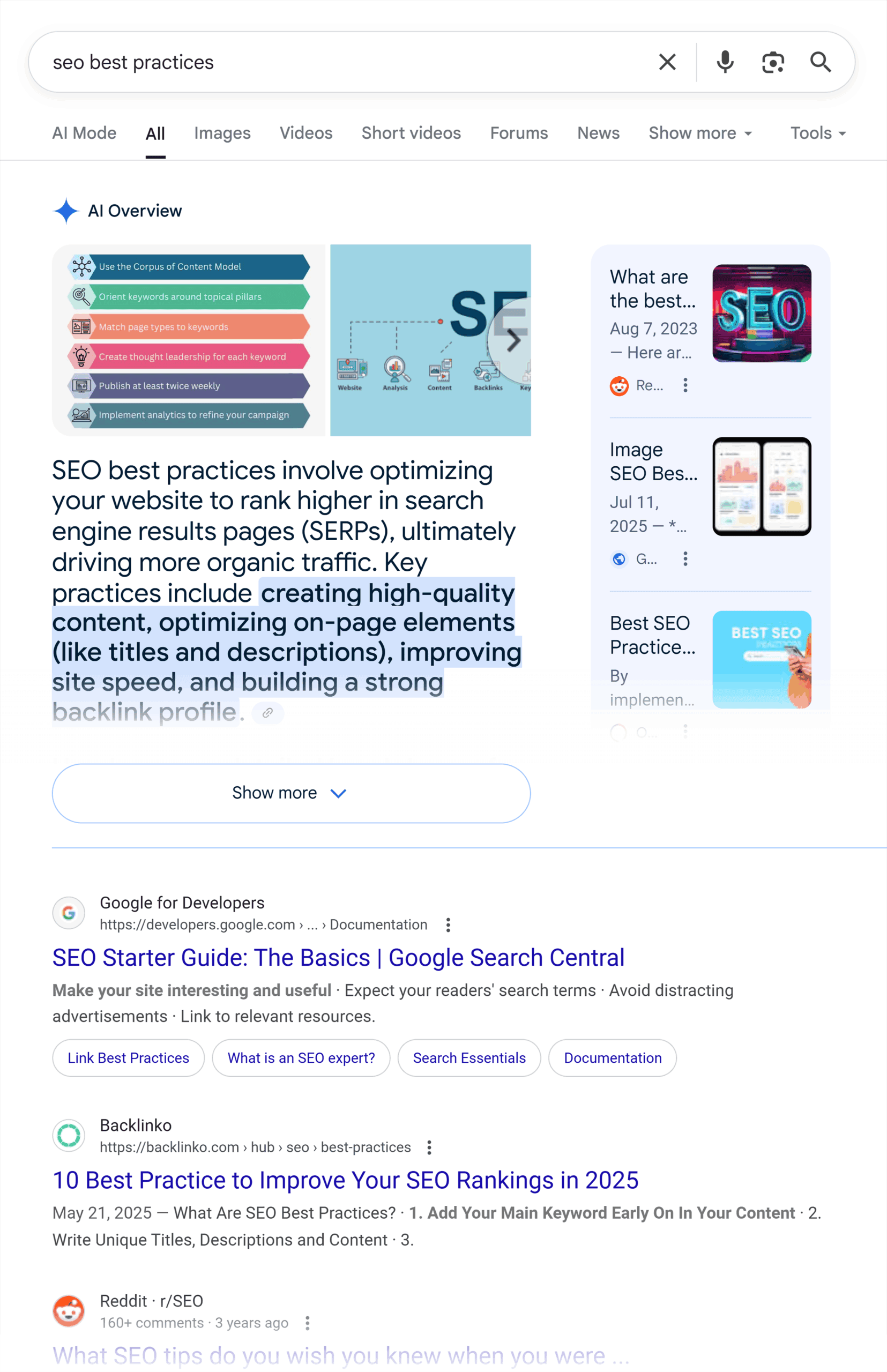
How to Improve Your Website’s Google Ranking
Improving your website’s Google ranking takes more than adding keywords to a few pages. Strong search performance comes from creating useful content, making pages easy to access and understand, and earning trust over time. There is no guaranteed shortcut to the top of search results, but a consistent SEO strategy can help the right people find your website.
Understand What Your Audience Is Searching For
Start by learning what potential visitors want to know, do, or buy. Search for topics related to your products or services and pay attention to the questions and types of pages that appear. This can reveal whether people are looking for instructions, comparisons, local providers, or a specific product.
Use those insights to plan pages around real needs rather than trying to force a keyword into every paragraph. A keyword research tool can help you find related terms and estimate search interest, but the goal is to understand the intent behind each search.
Create Helpful, Original Content
Publish content that answers the visitor’s question clearly and provides value beyond what is already available. Depending on your business, that might include detailed guides, service explanations, product information, case studies, or answers to common customer questions.
- Cover the subject thoroughly without adding filler.
- Use clear headings and short paragraphs to make pages easy to scan.
- Include original expertise, examples, or firsthand insight where appropriate.
- Keep important information accurate and update it when it changes.
- Make it clear who created or reviewed the content, especially for topics where accuracy matters.
Write for people first. Repeating the same phrase unnaturally or publishing many low-value pages can make a site less useful to visitors. A page should have a clear purpose and offer a satisfying answer to the searcher’s needs.
Optimize Page Titles and Descriptions
Each important page should have a unique, descriptive title. Include the page’s main topic naturally, and make the wording specific enough to distinguish it from other pages on your site. Search engines may change how titles or descriptions appear in results, so treat them as useful guidance rather than guaranteed display text.
A meta description can summarize what a visitor will find on the page. While it does not directly determine rankings, a relevant description may help people decide whether to click. Avoid vague descriptions and keyword lists.
Organize Your Website Clearly
A logical site structure helps visitors find information and helps search engines understand how pages relate to one another. Group related pages under clear categories, use descriptive navigation labels, and link between relevant pages.
For example, a service page can link to a useful guide, a related case study, and a contact page. Use link text that describes the destination rather than relying on phrases such as “click here” everywhere.
Make Your Website Fast and Mobile-Friendly
People should be able to use your website comfortably on phones, tablets, and desktop computers. Check that text is readable, buttons are easy to tap, and important content does not require awkward horizontal scrolling.
Page experience also matters. Compress oversized images, remove unnecessary scripts, and use reliable hosting. Google’s Core Web Vitals are a set of measurements related to loading performance, responsiveness, and visual stability. They can help identify user-experience issues, but improving a score alone does not guarantee higher rankings.
Check Technical SEO Basics
Technical problems can prevent search engines from finding or properly processing useful pages. Review these basics:
- Make sure important pages are accessible to visitors and search engines.
- Use a logical URL structure and redirect outdated URLs when appropriate.
- Check that pages intended to appear in search results are not accidentally blocked or marked “noindex.”
- Create and submit an XML sitemap through Google Search Console.
- Use HTTPS to secure your website.
- Fix broken links and avoid duplicate or confusing versions of the same page.
- Add structured data when it accurately describes the page and meets Google’s guidelines.
Google Search Console is a useful free tool for checking indexing issues, search queries, and page performance. It does not guarantee indexing, but it can help you spot problems and understand how your site appears in Google Search.
Build Credibility and Earn Relevant Links
Links from other reputable websites can help people discover your content and may contribute to how search engines understand your site. Focus on earning links naturally by publishing useful resources, sharing original research, participating in relevant industry communities, or building genuine business relationships.
Avoid buying links, joining link schemes, or using automated tactics intended to manipulate rankings. These approaches can violate Google’s spam policies and put your search visibility at risk. Trust is also built through accurate information, transparent business details, consistent service, and clear contact information.
Improve Local Search Visibility
If your business serves customers in a specific area, keep your business name, address, and phone number accurate and consistent. Claim and maintain your Google Business Profile, choose appropriate business categories, add current hours, and respond professionally to reviews.
Useful location pages can help explain which communities you serve, but avoid creating many nearly identical pages that provide little value. Each page should offer specific, accurate information for its intended audience.
Measure Results and Keep Improving
SEO changes usually take time to show results. Use Google Search Console to review impressions, clicks, queries, and indexing information. Analytics tools can help you understand what visitors do after arriving on your site.
Look for patterns instead of judging success by one keyword or a short-term ranking change. If a page receives impressions but few clicks, its title and description may need work. If visitors arrive but do not find what they need, improve the page’s clarity, usefulness, or next steps.
Common SEO Mistakes to Avoid
- Stuffing pages with repetitive keywords.
- Publishing AI-generated or copied content without meaningful review or added value.
- Creating pages solely to target slight variations of the same search.
- Ignoring mobile usability, broken links, or outdated information.
- Expecting immediate results or guaranteed top rankings.
- Making major changes without tracking what was changed and when.
Build Rankings by Building a Better Website
The most sustainable way to improve your website’s Google ranking is to make the site genuinely useful, trustworthy, accessible, and easy to navigate. Start with the pages that matter most to your audience, fix technical obstacles, and measure progress over time. Consistent improvements can strengthen both the search experience and the experience your visitors have once they arrive.
How to Improve Your Website’s Google Ranking: 8 Frequently Asked Questions
- How can I rank my website faster?
- How can I improve my Google site SEO?
- How do I get my website to the top of Google 2021?
- How do I get my website to rank 1 on Google?
- What is the 80/20 rule in SEO?
- Why is my website not ranking well on Google?
- Can I do SEO myself?
- How much does it cost to get to the top of Google search?
How can I rank my website faster?
The fastest way to improve your website’s visibility is to focus on high-impact basics: make sure important pages can be indexed, target search terms that match what your audience is looking for, and update those pages with useful, original information. Improve page titles, mobile usability, and load times, then use Google Search Console to spot indexing issues and track results. SEO takes time, and no tactic can guarantee fast rankings; avoid shortcuts such as buying links or stuffing keywords, which can harm your site.
How can I improve my Google site SEO?
To improve your site’s SEO on Google, create original, helpful content that matches what your audience is searching for, and organize it with clear headings, descriptive page titles, and relevant internal links. Make sure your site works well on mobile, loads quickly, uses HTTPS, and lets search engines access important pages. Use Google Search Console to find indexing issues and see which searches bring visitors, then update pages based on what you learn. SEO takes time, so focus on steady improvements rather than shortcuts or guaranteed-ranking promises.
How do I get my website to the top of Google 2021?
There’s no guaranteed way to get your website to the top of Google, and strategies that worked in 2021 may have changed since then. The best approach is to publish original, useful content that matches what people are searching for, make your site fast and mobile-friendly, organize pages clearly, use descriptive titles, fix technical issues, and earn relevant links naturally. Track performance with Google Search Console and keep improving pages based on what visitors need; avoid keyword stuffing or paid link schemes, which can harm your visibility.
How do I get my website to rank 1 on Google?
There’s no guaranteed way to rank first on Google, and rankings vary by search, location, and user. To improve your chances, create genuinely useful content that matches what people are looking for, make your website fast and mobile-friendly, use clear page titles and headings, fix technical issues that prevent pages from being found, and build credibility through trustworthy information and relevant links. Track performance in Google Search Console and keep improving based on what visitors search for and which pages serve them well.
What is the 80/20 rule in SEO?
The 80/20 rule in SEO is a practical guideline suggesting that a small share of your efforts may produce most of your results—not an official Google ranking rule or a guaranteed ratio. For example, a few pages may drive most of your organic traffic, or improving high-potential content and fixing major technical issues may have more impact than making small changes across the entire site. Use analytics and Google Search Console to identify your strongest opportunities, then focus on the work most likely to help visitors and support your business goals.
Why is my website not ranking well on Google?
Your website may not rank well on Google for several reasons, including content that doesn’t fully meet searchers’ needs, strong competition, technical issues that prevent pages from being crawled or indexed, slow loading or poor mobile usability, and a lack of trusted links or clear site structure. New websites and recently updated pages may also need time to gain visibility. Use Google Search Console to check indexing and performance, then improve your most important pages with accurate, useful content and a better user experience.
Can I do SEO myself?
Yes, you can do SEO yourself, especially if you’re willing to learn the basics and work on it consistently. Start by creating helpful content for your audience, using clear page titles and headings, improving your site’s mobile experience and speed, and checking for indexing issues with Google Search Console. SEO takes time, and more technical or competitive websites may benefit from professional support, but many essential improvements are manageable without hiring an agency.
How much does it cost to get to the top of Google search?
There’s no fixed price to reach the top of Google, and no legitimate provider can guarantee a specific ranking. Organic SEO costs vary based on your website, competition, goals, and the work needed—such as technical fixes, content creation, and link earning. Paid search ads are charged separately and can appear prominently, but you pay for clicks and the placement ends when your budget runs out. Be cautious of anyone promising guaranteed top rankings for a set fee.